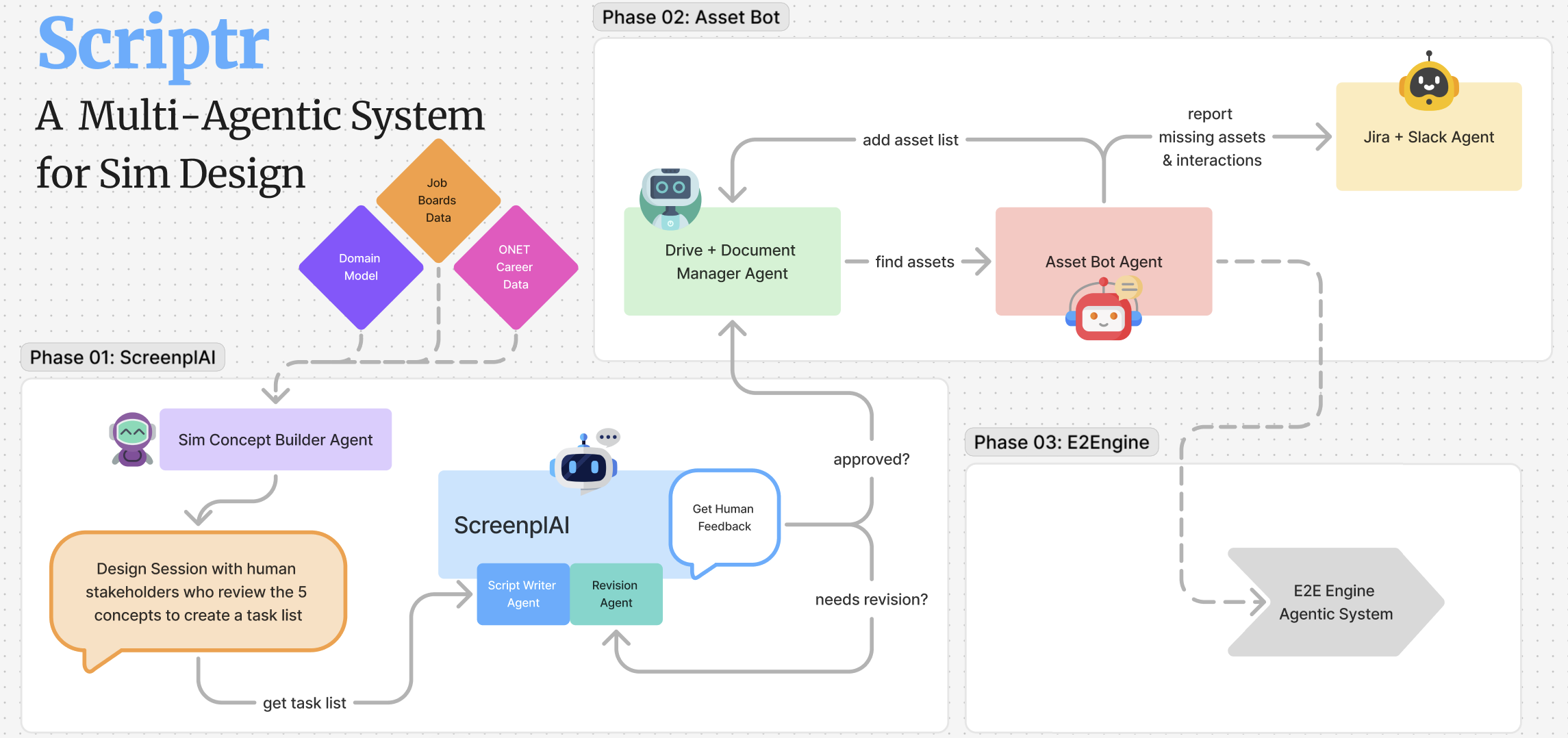
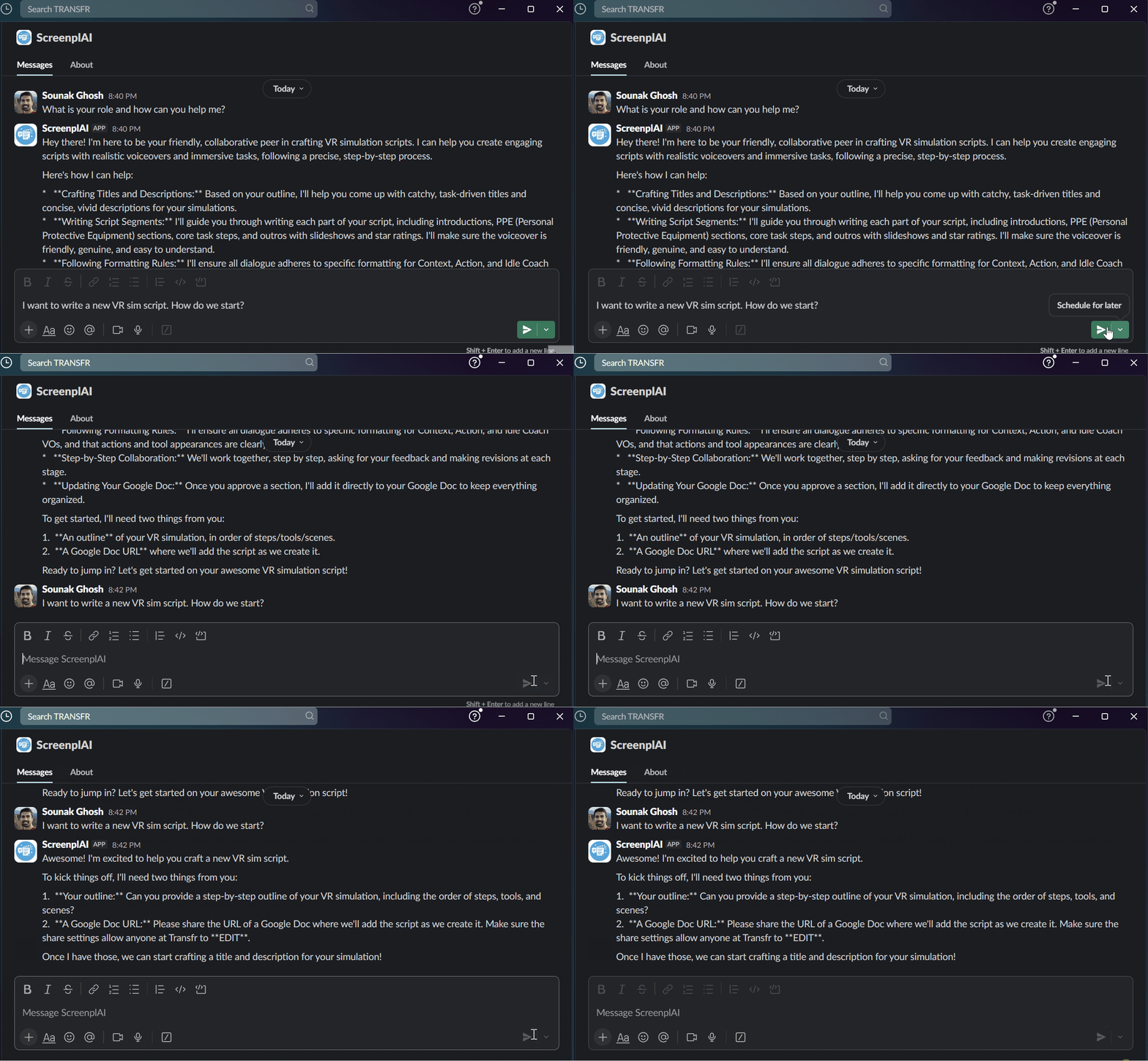
Phase 1: ScreenplAi — From 5 Days to 75 Minutes
The first hurdle was scriptwriting. Vendors spent days drafting scripts that often missed the mark.
- The Solution: I built ScreenplAi, an AI chatbot created using Google Gems that has a curated knowledge base of writing instructional voice-overs and format scripts for VR Sim Development. It scrapes real-world career data from O*NET and translates it into five distinct simulation concepts and task lists which can then be refined into a full script with instructional voice-over and formatting for VR interaction design.
- The Impact: In our pilot for a 'Food Scientist' simulation, we reduced the time to a final, formatted script from 5 days down to just 75 minutes.
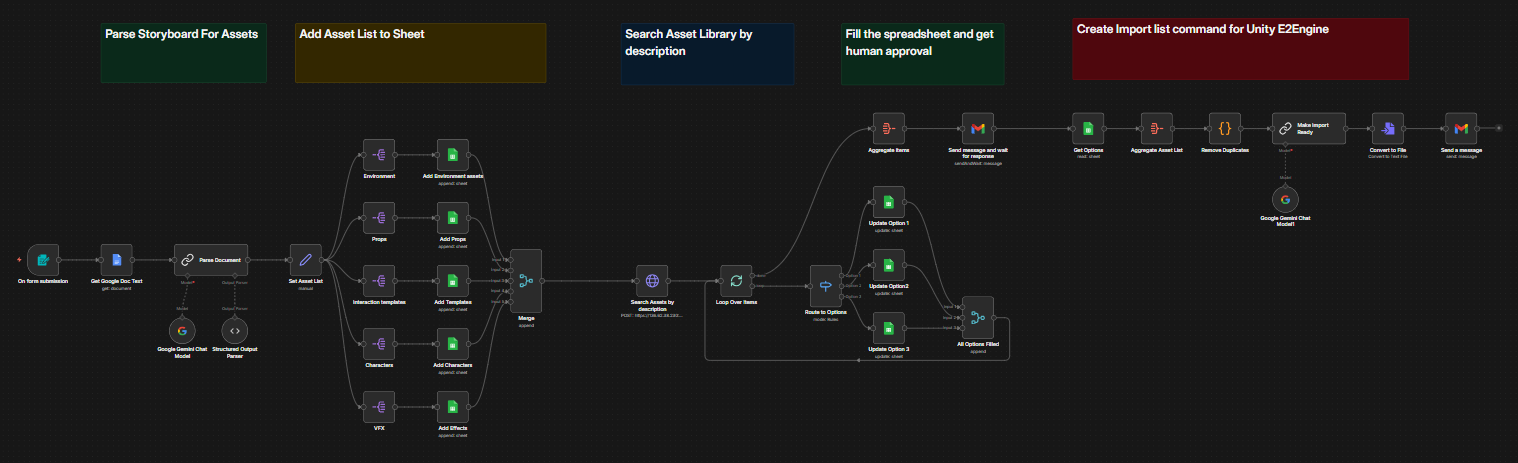
Phase 2: Asset Bot — Eliminating Redundancy
Once the script is generated:
- An AI workflow (n8n) searches Transfr's Asset Library for 3D assets, tools, and interaction templates to populate Unity projects.
- This eliminates redundant asset creation, drastically improves project scoping accuracy, and immediately flags any missing assets by autonomously creating Jira tickets for the art pipeline.
- Using Gemini's vector embeddings: we created a RAG database of 3D assets with description tags. This enabled other AI workflows (like n8n) to retrieve assets from this database using Semantic Search.
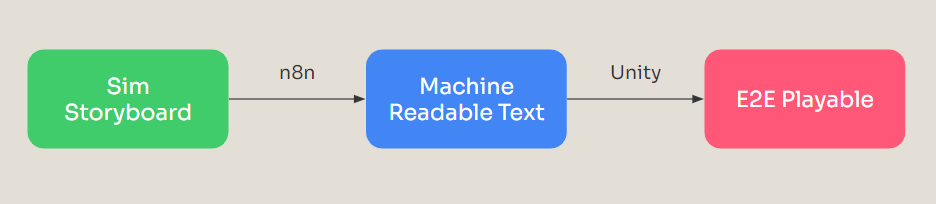
Phase 3: E2Engine — The End-to-End Revolution
The ultimate bottleneck in XR is waiting for a playable build to test the 'feel' of a simulation.
- The Solution: E2Engine is designed to fully auto-generate a playable end-to-end (E2E) structure in Unity, complete with voice-over setup and an editable scene graph.
- Technical Implementation: I wrote an 11-page system prompt to context engineer how an LLM model should translate a script document into a pseudo-code structure (aligned with Transfr's SDK capabilities) parsed by a Unity C# script which runs the automation workflow in Unity.
- The Strategic Shift: This moves the vendor's role from 'early-stage creation' to 'high-fidelity polish,' allowing us to validate the design much earlier in the cycle.
The Impact: Scalable Innovation
By bridging the gap between Engineering, Design, and AI Strategy, Scriptr delivered measurable business value:
- $32,719 saved per simulation.
- 30 days saved in production time per project.
- Projected Savings: For the 15 external simulations planned for 2025, this system is on track to save over $214,000 and 2,400 production hours.