Can We Code a Connection to the Self?
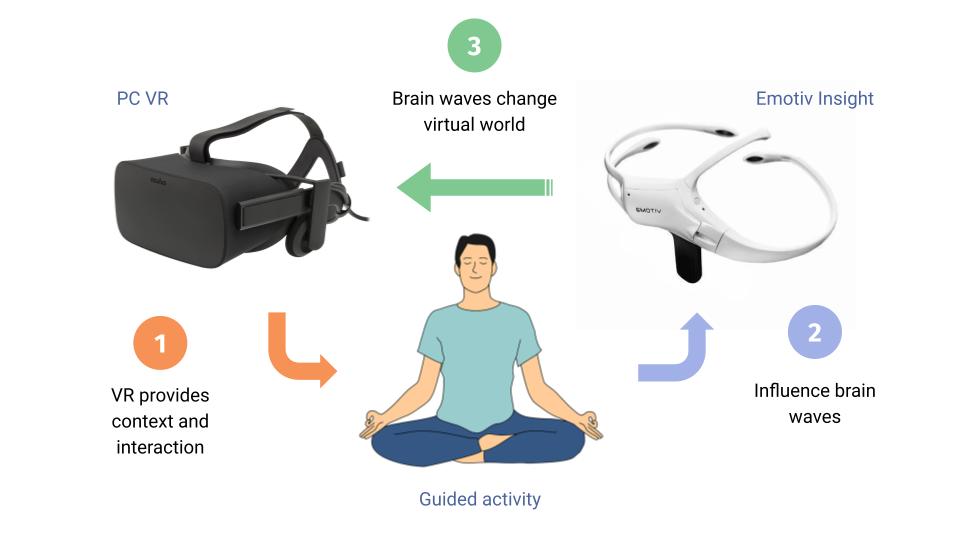
Inner Light was born from a desire to move VR beyond a purely visual medium and create an embodied extension of the body-mind as a whole. The project served as both an immersive art installation and an academic exploration into the efficacy of neurofeedback within virtual environments.
The Technical Dialogue: Brainwaves as Brushes
The design challenge was to create a real-time, bi-directional dialogue between a user’s internal state and their digital representation. I approached this by architecting a system that translated invisible neural activity into tangible, physical form.
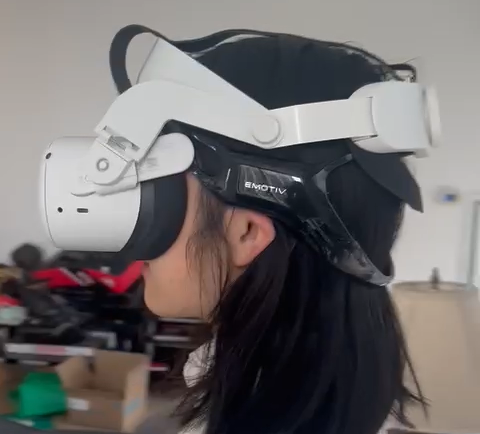
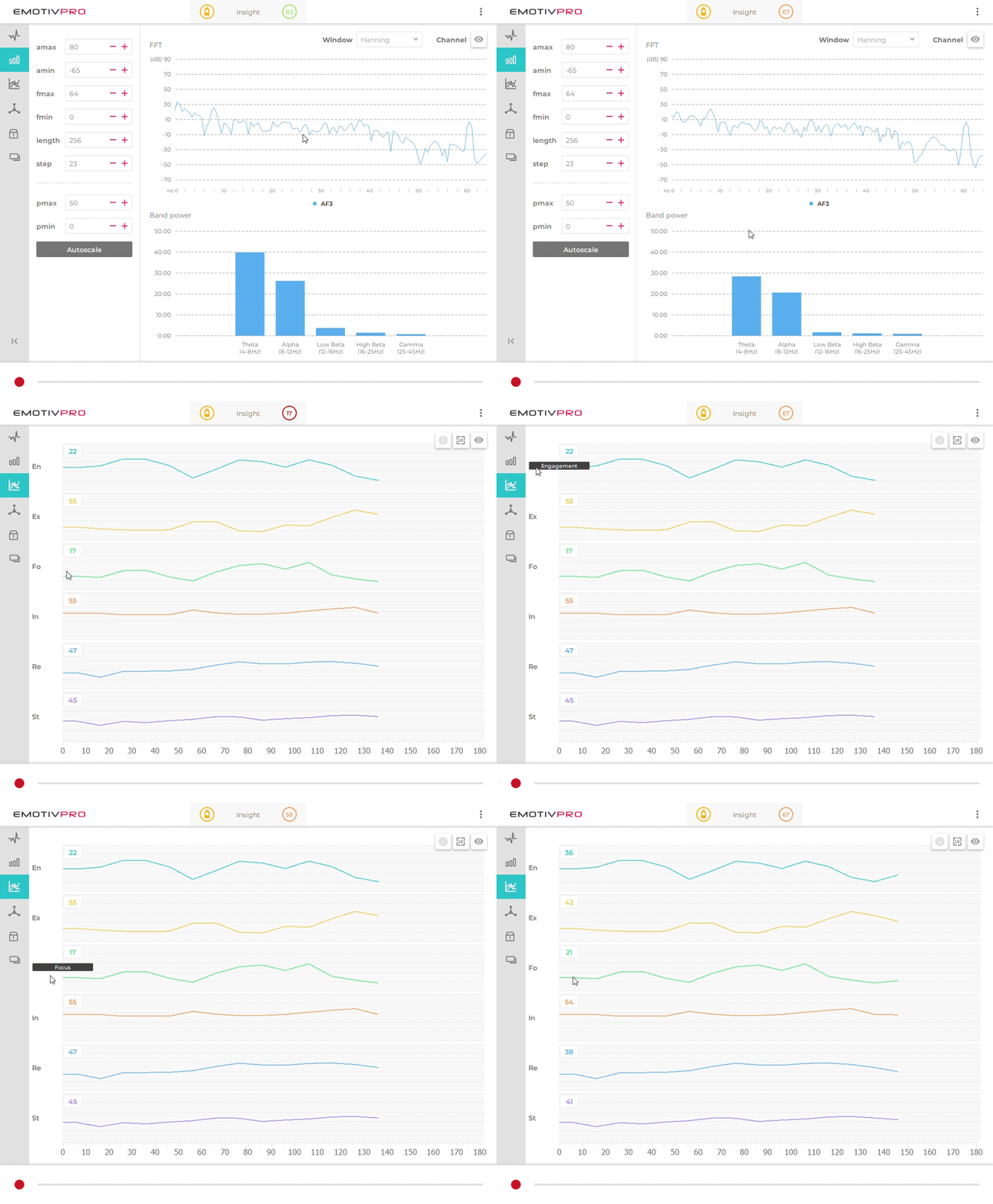
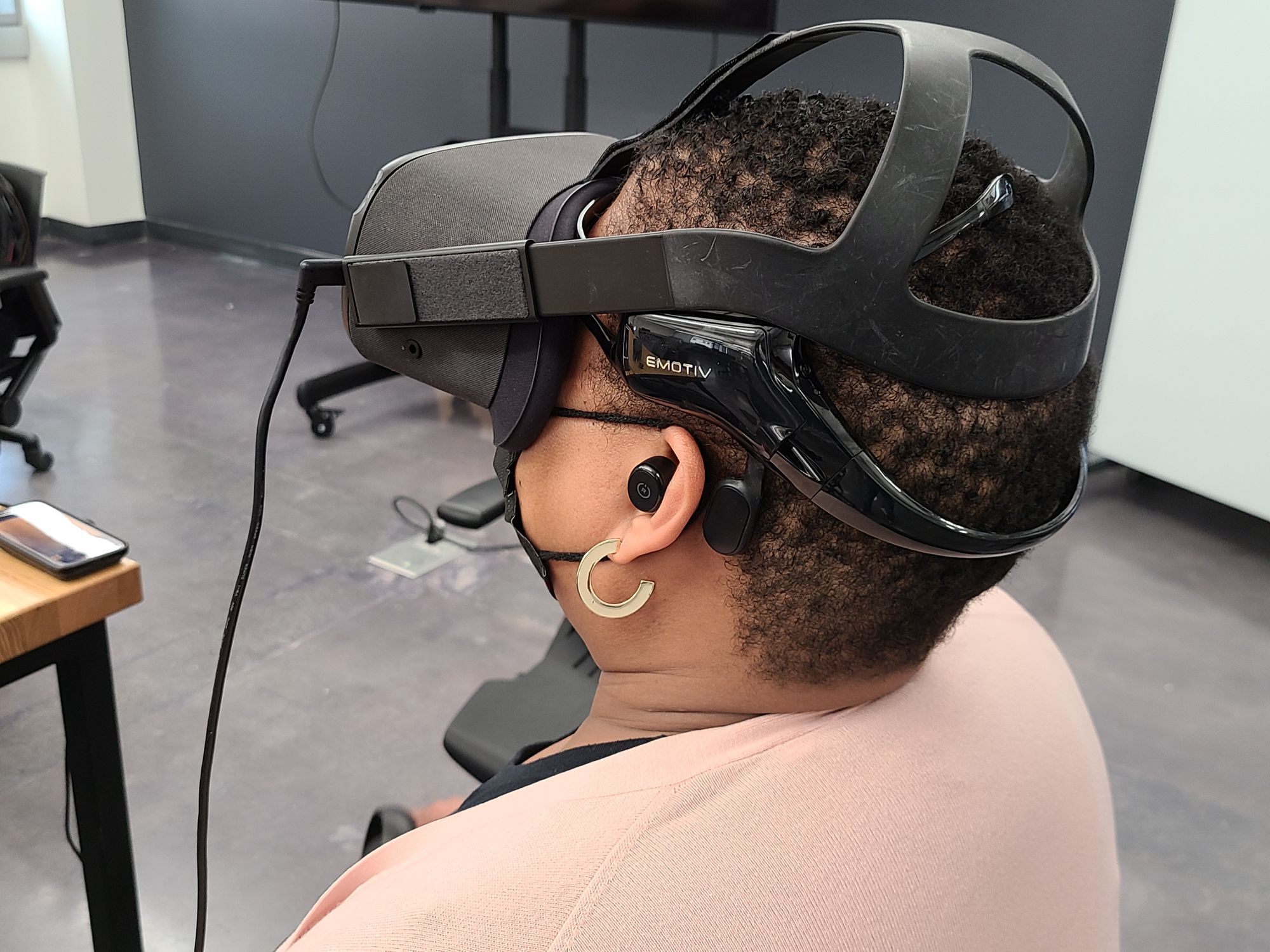
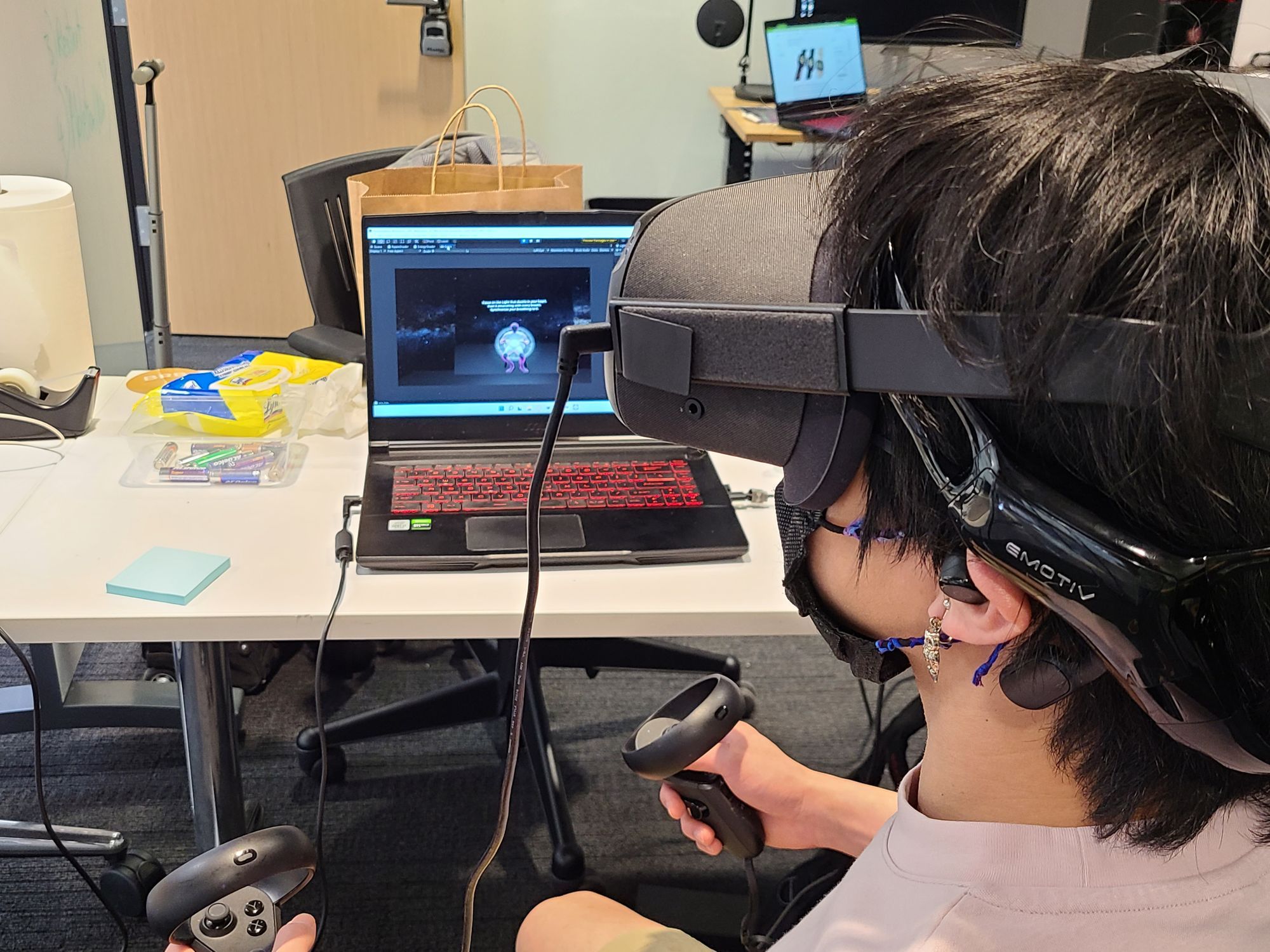
- Neurotech Integration: I utilized an Emotiv EEG headset with five sensors to capture raw neural data. Using Emotiv's software, I isolated the frequency ranges for Alpha, Beta, Gamma, and Delta waves, providing a structured data stream representing the user's focus and relaxation levels.
- Procedural Visualization: In Unity, I developed a custom 3D avatar with a specialized wave-like shader. I programmed the amplitude and light emission of this shader to be procedurally driven by the incoming EEG data.
- The Interface: This created a Neuro-Immersive UI where the "user interface" wasn't a menu, but the user's own virtual skin. When the user reached a state of meditative focus, the avatar’s light would stabilize and pulse in synchronicity with their neural rhythm.
- Full Body IK Avatar: for the embodiment to be realistic and truly felt, I had to make the avatar a full-body IK system by targeting only the head and the two controllers. This heightened the sense of embodiment that users felt with this virtual body.
The Experience: From Embodiment to Dissociation
The narrative arc of Inner Light followed a specific psychological protocol designed to test the limits of digital presence.
- Deep Embodiment: The experience began with a guided white light meditation. By seeing their own "brainwaves" reflected in the avatar they occupied, users experienced a profound sense of embodiment - a feeling that the virtual body was truly their own.
- Digital Dissociation: Once a stable meditative state was reached, the system initiated a programmed sequence I designed to simulate an out-of-body experience. I scripted the camera and avatar transform logic to gradually separate the user's viewpoint from the virtual form they had just inhabited.
- The Conceptual Framework: This idea of simulating an out-of-body experience to explore consciousness was informed by research from Mel Slater at the University of Barcelona, which demonstrated that such virtual experiences can effectively reduce the fear of death.
Learnings: The Tension of the Void
During the development and testing of this experiment, I discovered that the human response to digital "detachment" is far from uniform. I initially anticipated that the transition to an out-of-body state following a white light meditation would be an almost universally liberating feeling. While many participants did describe a sense of profound freedom and lightness, a subset of users felt a distinct sense of unease during the separation as well. This divergence brought the experiment back to its core philosophical root: the fear of dying, and how we each respond to it.
Impact & Recognition
This experiment bridged the gap between Neuroscience, Spiritual Tradition, and XR Engineering. It proved that biofeedback, when integrated with intentional storytelling, can produce measurable psychological shifts.
- Featured Artist: Presented at MOCDA (Museum of Contemporary Digital Art) during the 2022 Digital Summer Show.
- Published as Academic Thesis in Integrated Digital Media from NYU Tandon School of Engineering in 2022. Read it here: https://www.proquest.com/openview/d850eeb668d48ecf11a179d30c028609/1?pq-origsite=gscholar&cbl=18750&diss=y