Visualizing the Internal State
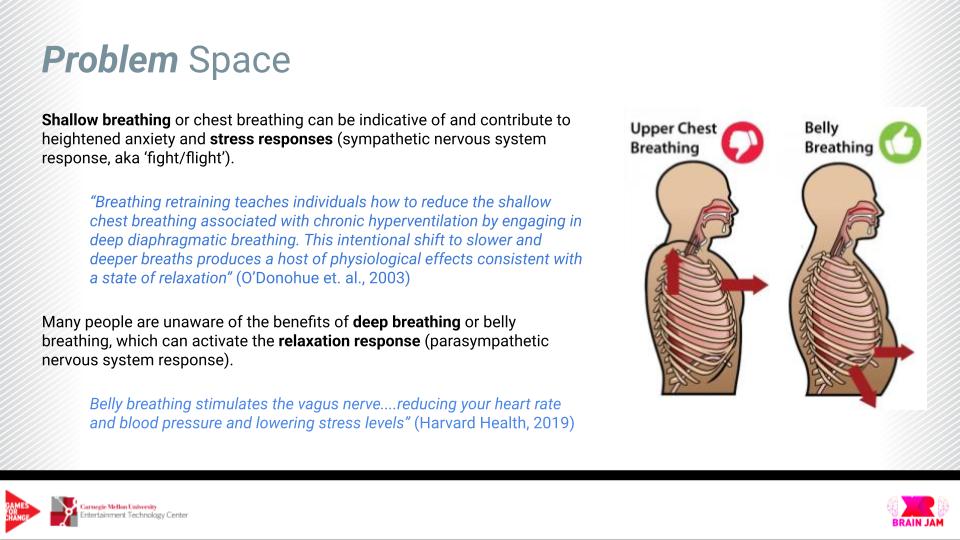
In 2021, I collaborated with a research specialist in therapeutic gaming to tackle the problem of anxiety through box breathing—a hypoxic technique designed to oxygenate the blood and calm the nervous system. The goal was to move beyond a simple "instructional" video and create an environment that dynamically responded to the user's own physiological rhythm, making the invisible process of breathing a tangible, interactive experience.
The Creative Hack: Turning Controllers into Sensors
The core design challenge was capturing accurate respiratory data without a dedicated sensor. We developed a creative hardware "hack" that became the technical foundation of the project:
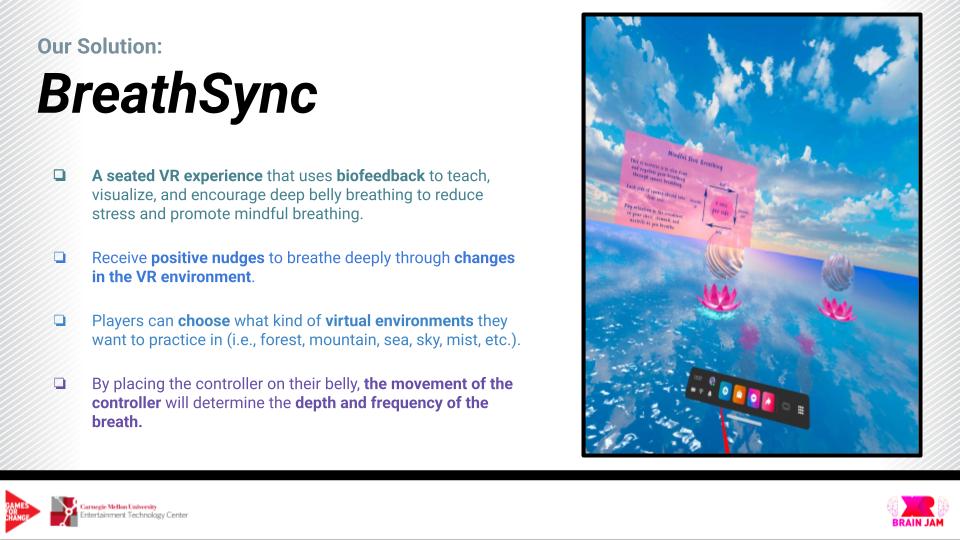
- Physical Integration: We strapped a standard VR controller to the user's stomach, utilizing its high-fidelity IMU sensors to track the physical expansion and contraction of the abdomen.
- Translational Mapping: I implemented the math required to translate the controller's raw translational movement into a real-time data stream. This stream directly scaled a central virtual orb: as the user inhaled, the orb grew; as they exhaled, it shrank.
- The Gameplay Loop: The experience became a meditative "syncing" game. Users were tasked with matching the size and rhythm of their personal orb with a guiding, rhythmic orb that moved at the ideal pace for anxiety reduction.
Role & Multi-Disciplinary Execution
Serving as Producer, Developer, and Technical Artist, I was responsible for ensuring the technical implementation never lost sight of the researcher's clinical intent.
- Technical Artistry: I authored custom shaders that responded to the "breath-state" transitions. As the user achieved a perfect sync, the environment would dynamically reveal new visual layers, providing a rewarding, multi-sensory confirmation of their calm state.
- Multidisciplinary Management: Under the intense 72-hour deadline of the XR Brain Jam, I managed the workflow between our researcher, designer, and engineer, ensuring we delivered a functional, stable prototype that stood up to the rigors of an academic and industry review.
Impact & Recognition
The success of this project led to a public talk at the Games for Change Festival 2021, where I presented our findings on biofeedback-driven design. This work reinforced my belief that the most profound technological solutions often come from looking at existing hardware through a creative, human-centric lens.